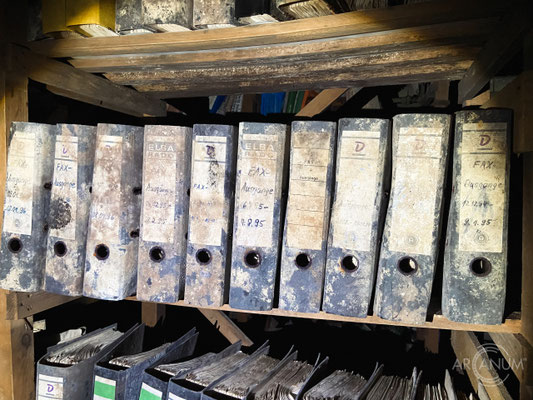
The Archive of Decay
Former Foundry Administration Building
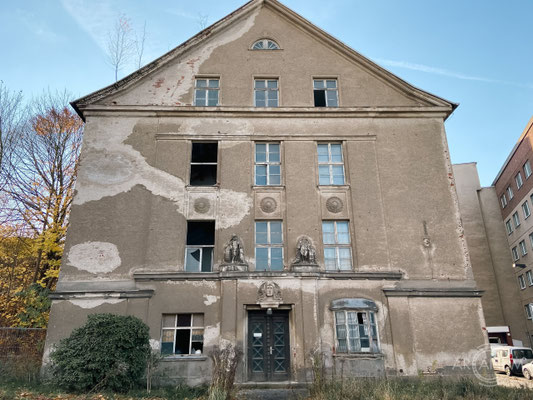
Dominating the entrance area of a long-abandoned industrial complex, this imposing administration building once served as the organizational center of a major steel foundry. While the surrounding workshops were dedicated to heavy industrial production, the offices within these walls coordinated the planning, management, engineering, and financial operations that kept the site running.
Although no definitive construction records have been located, the architecture strongly suggests a construction date in the years immediately before the First World War.
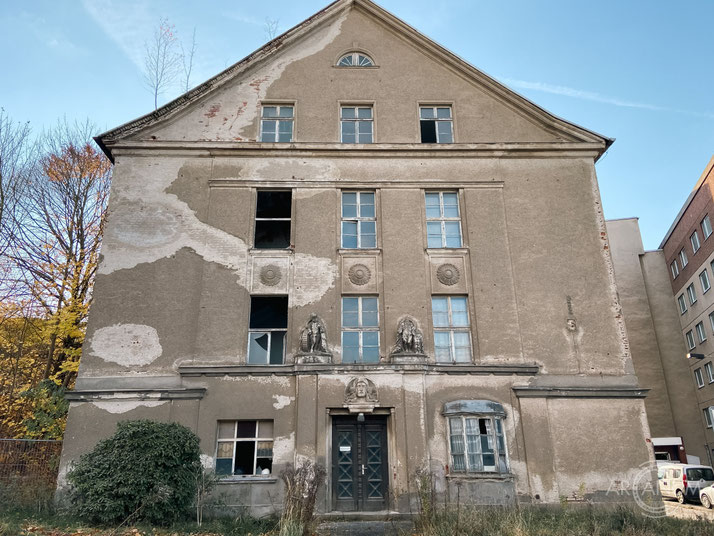
The symmetrical façade, monumental entrance, decorative reliefs, and allegorical sculptures are characteristic of the period between roughly 1905 and 1915, when industrial companies often invested considerable resources in representative administrative buildings.
Particularly striking are the sculptural figures above the main entrance. One figure is depicted alongside a large gear wheel, a traditional symbol of machinery and industrial progress. Together with the elaborate entrance relief, these decorative elements were intended to convey technical achievement, economic strength, and confidence in the future. Such ornamentation was common during the height of Europe's industrial expansion but became increasingly rare in later decades.
The building appears to have been constructed during the early development of the foundry itself, whose origins date to the years immediately before and during the First World War. As the industrial complex expanded, the administration building remained its public face, welcoming visitors, suppliers, engineers, and company officials while overseeing the activities of the production halls beyond.
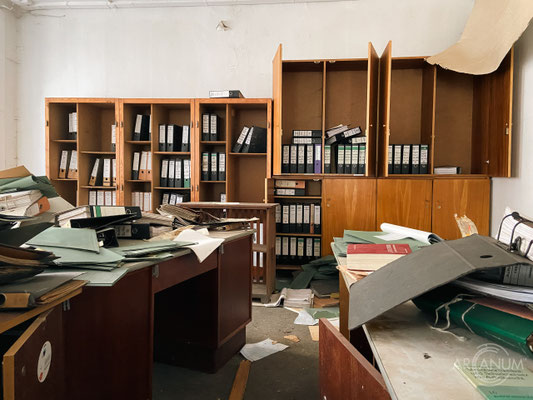
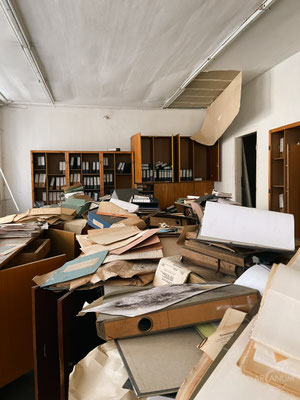
Throughout the twentieth century, the structure witnessed profound political, economic, and technological changes. Industrial operations continued under different management systems and changing economic conditions, yet the building retained its original administrative role for decades. Behind its formal façade, countless decisions were made that shaped the operation and development of the works.
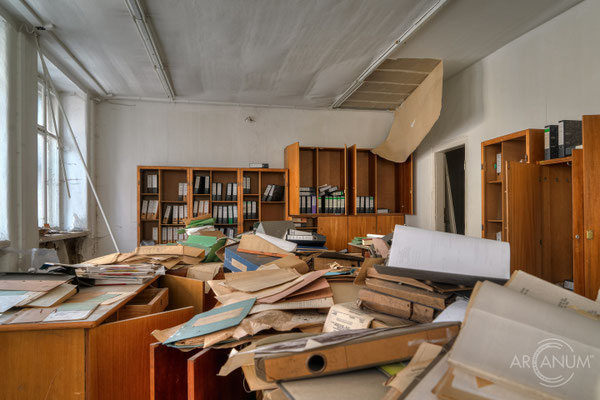
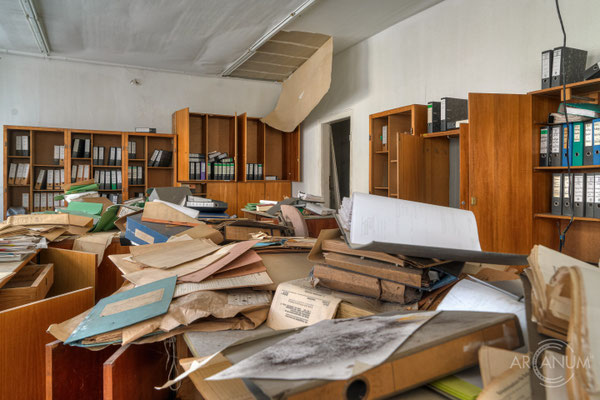
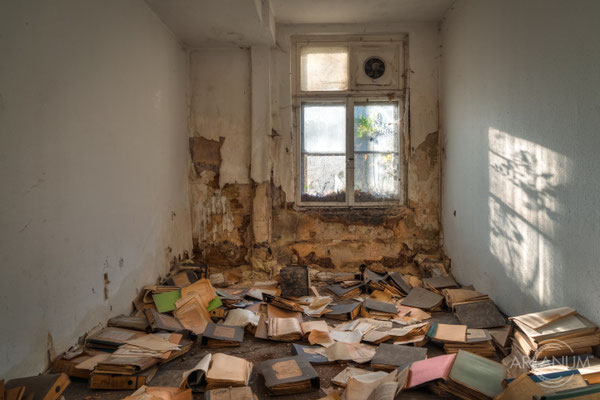
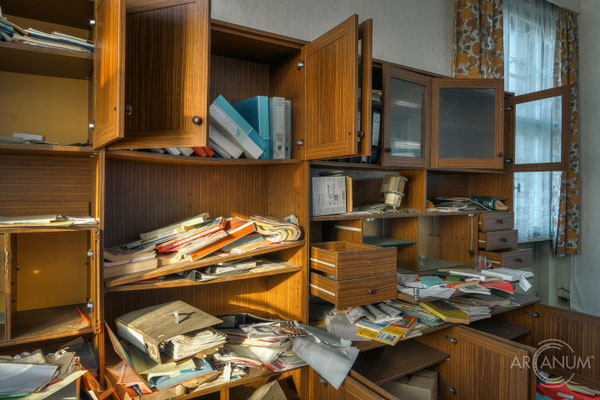
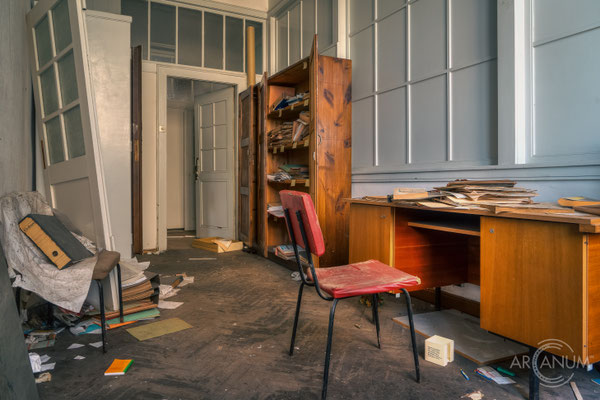
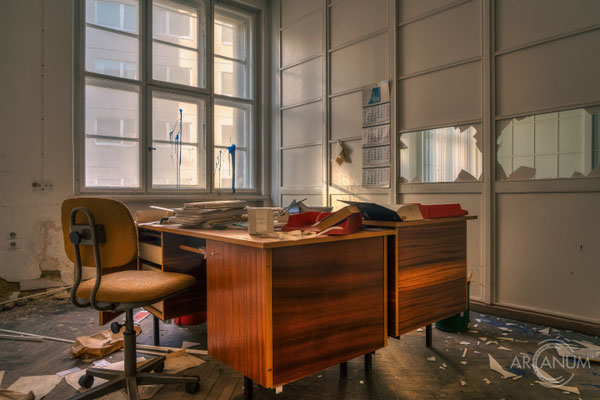
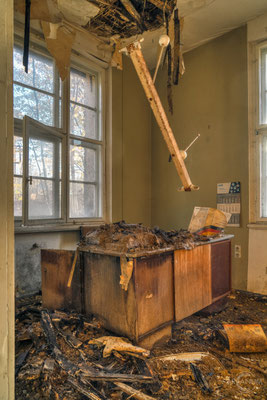
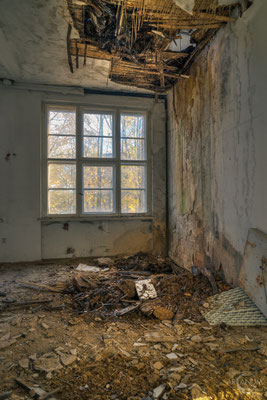
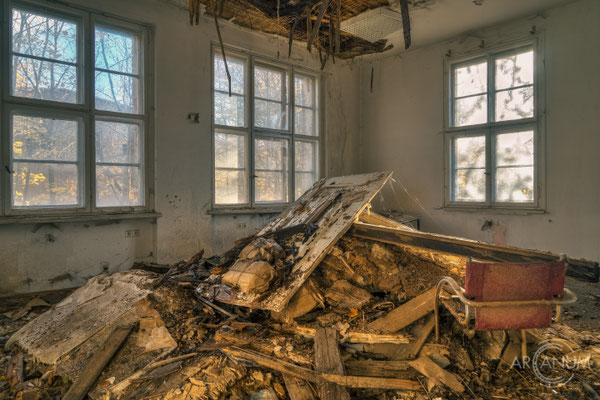
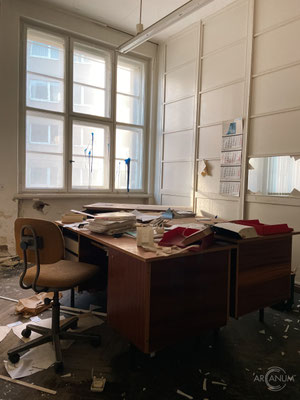
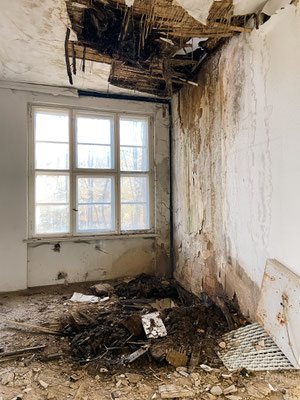
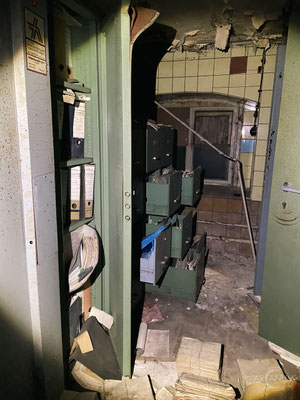
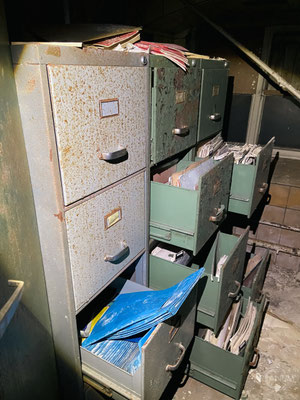
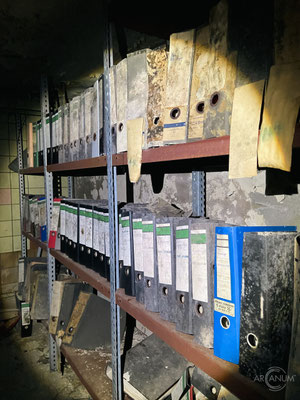
Following the decline of heavy industry in the late twentieth century, the offices gradually fell silent. Production was reduced, buildings were abandoned, and the administrative center lost its purpose. Today, broken windows, weathered plaster, and encroaching vegetation reveal the effects of years of neglect.
Despite its deteriorating condition, the building remains one of the most architecturally distinctive survivors of the complex. Its decorative façade offers a rare glimpse into an era when industrial enterprises sought not only to manufacture steel, but also to project ambition, stability, and prestige through architecture.
Visited: November 9, 2021
Location: Undisclosed, Germany
Status: Abandoned