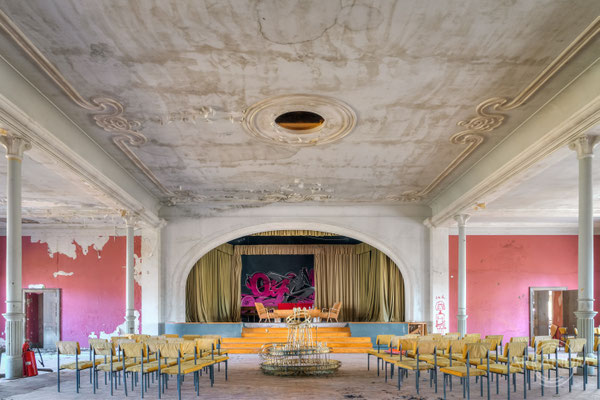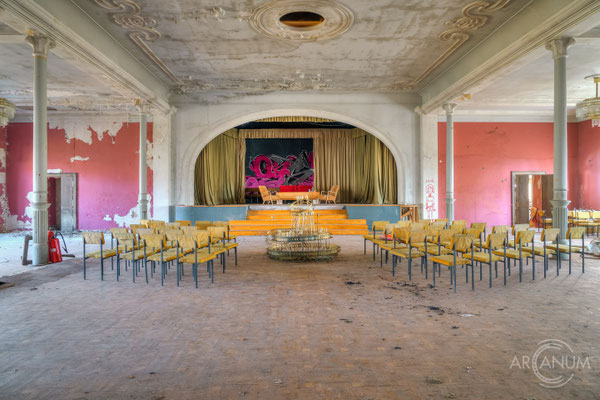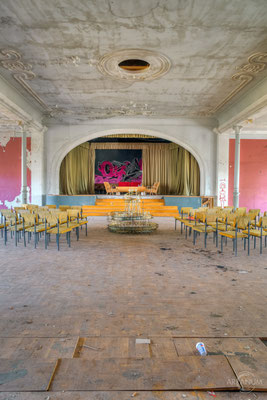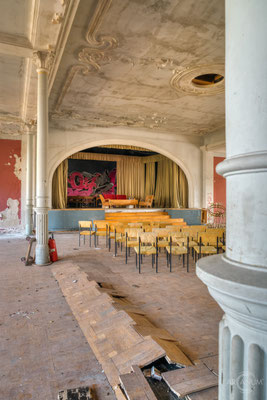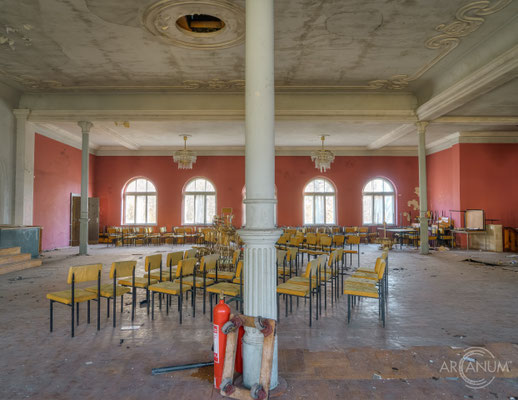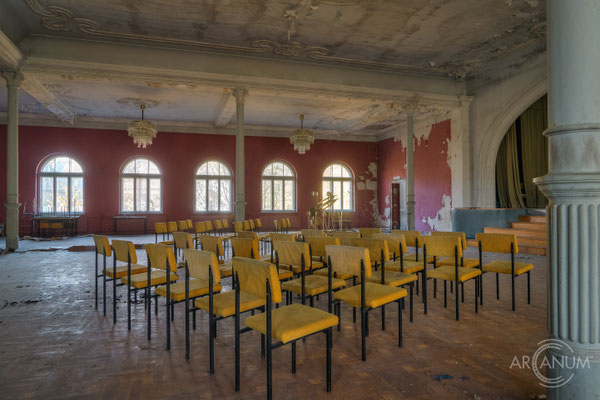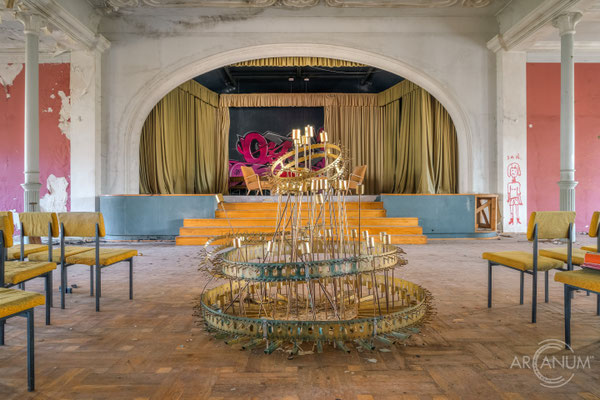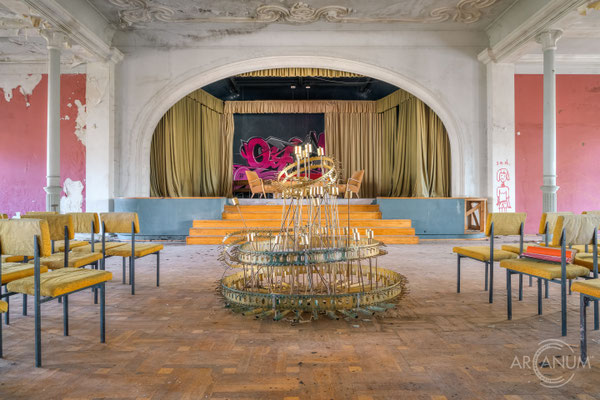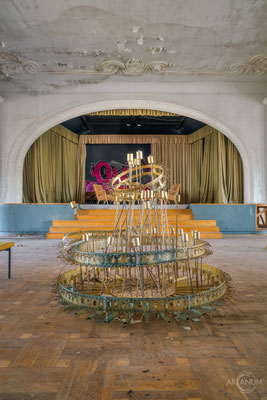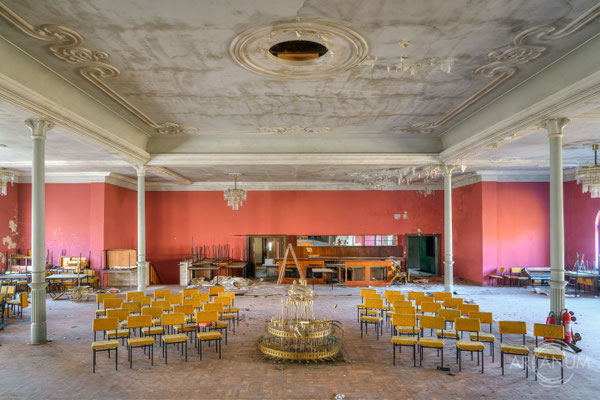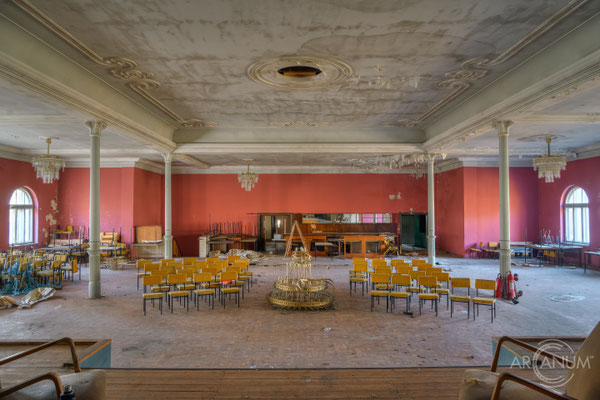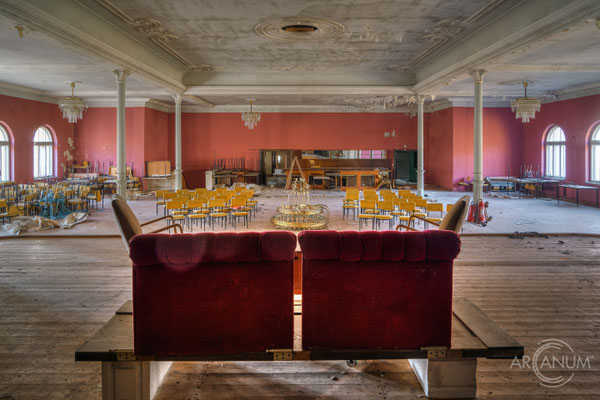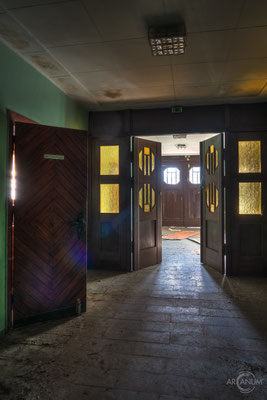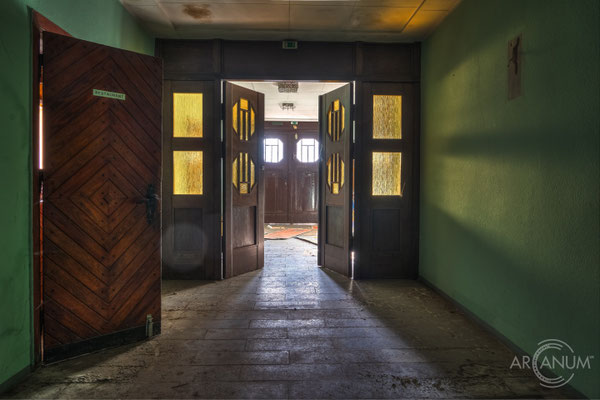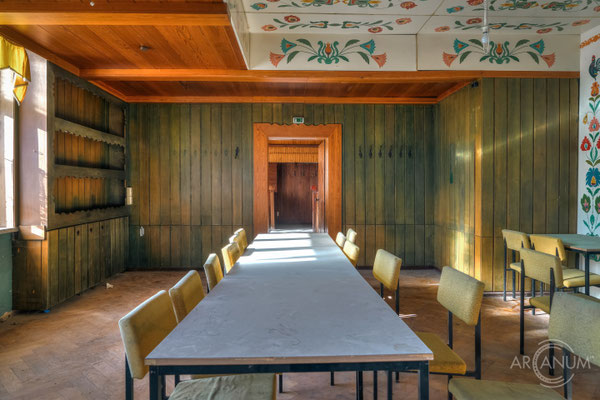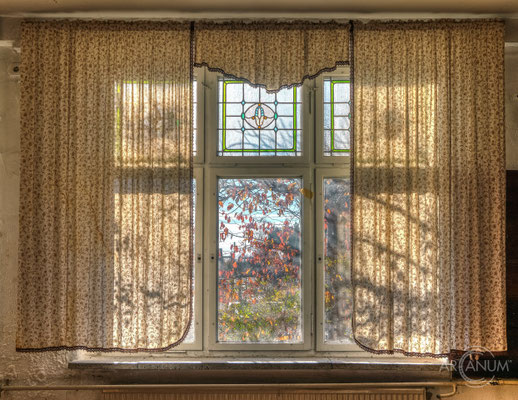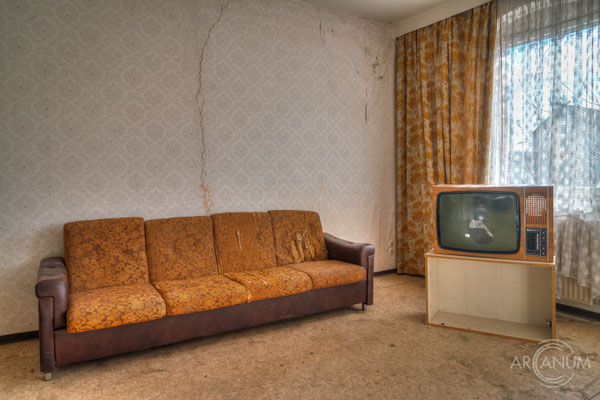
Ballroom "Chandelier"
Origins and Early History
This former inn in Saxony is one of the most historically significant former excursion restaurants in the Chemnitz region. Although the current building dates to 1882, the site itself is far older.
Historical records mention a tavern at this location as early as 1445. At that time it was known as the Gäßnerschenke, a roadside inn situated along the old route leading toward the Rabenstein Castle. For centuries, the property served travelers, traders, and locals moving through the area.

During the late 19th century, the city expanded rapidly as an industrial city. At the same time, the surrounding countryside - especially the Rabenstein area with its forests and castle - became a popular recreational destination for city residents seeking leisure and fresh air outside the industrial center.
In 1882, the old inn was demolished and replaced with a much larger and more prestigious building commissioned by Ernst Ferdinand Dittrich. The newly constructed establishment included an impressive ballroom and from this point onward became known as the "Goldener Löwe".
The Saxon heritage authorities later described the complex as a historically significant and architecturally valuable inn with ballroom facilities.
A Social and Cultural Center
During the German Empire and the early 20th century, the inn evolved into one of the central social venues of the "Ore Mountain Basin" region.
The complex included:
- a large ballroom and dance hall
- restaurant and tavern rooms
- a beer garden
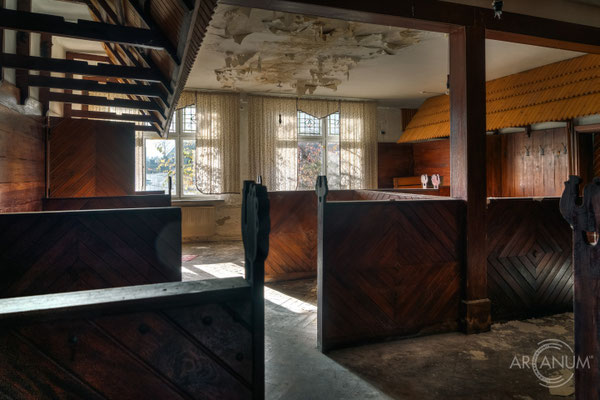
- a “coachmen’s room” (Kutscherstube)
- facilities for celebrations and public events
The inn became especially popular during the era of excursion tourism around the city. Visitors traveled to the area for hiking, recreation, and entertainment, and the inn became one of the district’s most important gathering places.
Over the decades the property changed ownership several times. In 1928, it was acquired by the association "Volkshaus für Rabenstein und Umgegend" (“People’s House for Rabenstein and Surroundings”), indicating that the venue increasingly served cultural and community functions in addition to hospitality.
The National Socialist Period
During the Nazi era, the association that owned the property was forcibly dispossessed. In 1937, the building underwent another major renovation and expansion.
Like many large public venues in Germany during this period, the Goldener Löwe became integrated into the political and social structures of the time. However, publicly available documentation regarding its exact wartime use remains limited.
The GDR Era - Dance Hall and HO Restaurant
After World War II, the building initially became property of the Socialist Unity Party (SED). By the 1950s, it was operated as an HO restaurant - part of East Germany’s state-owned retail and hospitality system.
During the decades of the German Democratic Republic (DDR), the inn once again became a vibrant social center. Many former residents of Chemnitz still remember the venue fondly.
The inn hosted:
- dance evenings and live music performances
- family celebrations and weddings
- club meetings and community events
- excursion dining for visitors to Rabenstein
Particularly famous were the dance nights featuring the Karl-Walter Orchestra, which attracted guests from across the region. The large ballroom became one of the defining entertainment venues of the city.
Decline After German Reunification
Following German reunification in 1990, the inn initially continued operating under private ownership. However, the nature of the business gradually changed.
Traditional gastronomy and cultural events increasingly disappeared and were replaced by:
- promotional sales events
- temporary commercial activities
- reduced restaurant operations
- fewer public dances and celebrations
By the mid-1990s, the historic ballroom was no longer in regular use. The smaller restaurant and brewery-style tavern survived until around 2002, while the beer garden continued operating only occasionally afterward.
By approximately 2005, the entire complex had been abandoned.
From Historic Landmark to “Lost Place”
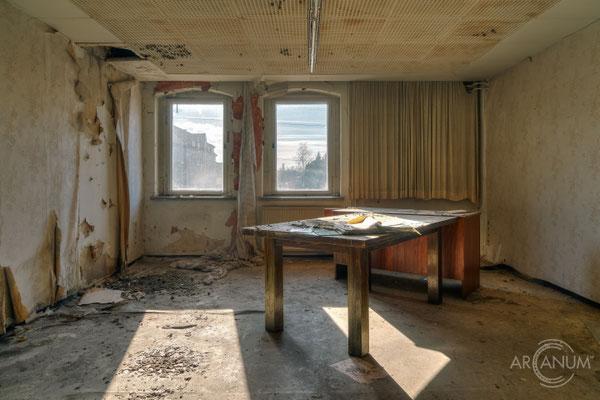
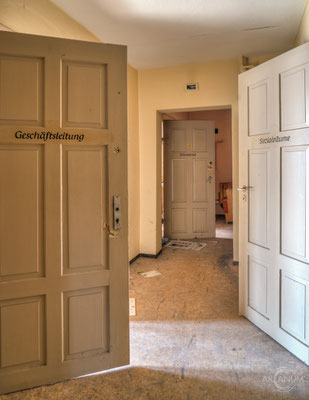
Today, the "Goldener Löwe" is widely known among urban explorers and architectural photographers as one of Chemnitz’s most iconic abandoned buildings.
Several factors contributed to its reputation:
- its prominent roadside location
- proximity to Rabenstein Castle
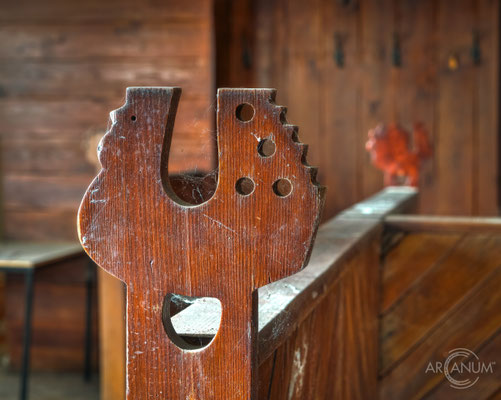
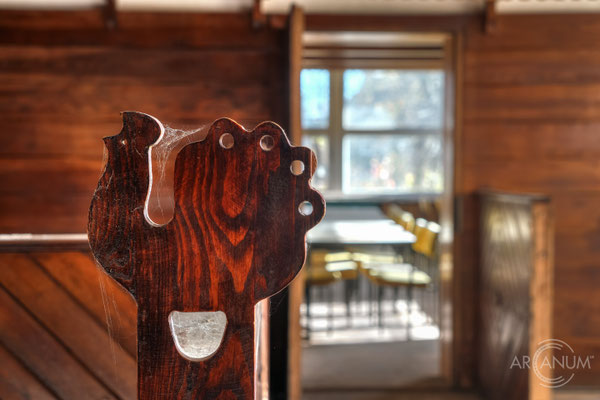
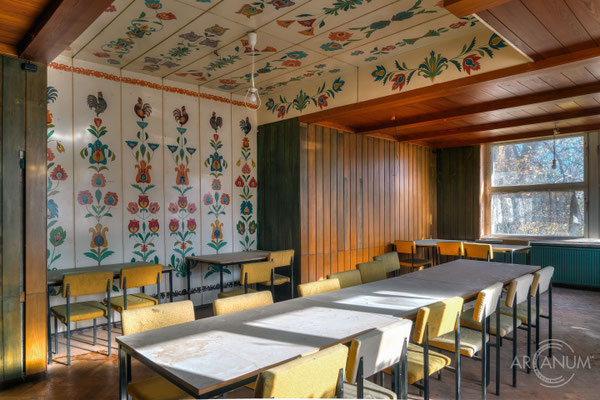
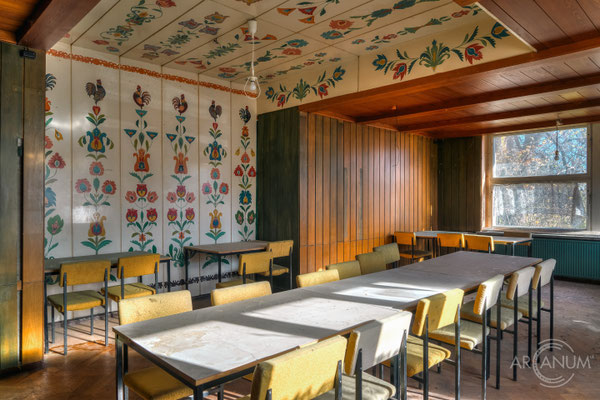
- the enormous historic ballroom
- decades of vacancy
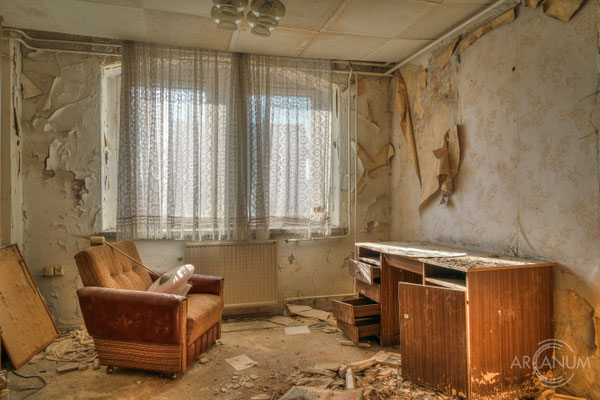
- advanced structural decay despite heritage protection
The building’s abandoned interiors and collapsing event spaces became a symbol of both post-reunification decline and the difficulties of preserving historic architecture in eastern Germany.
Demolition Plans and Preservation Conflicts
The future of the Goldener Löwe has been heavily debated for years.
In 2016, the property owner applied for demolition permission. Plans reportedly included the construction of residential housing on the site, with approximately sixteen homes proposed for the property.
However, preservation authorities rejected a complete demolition because the complex is officially protected as a cultural monument.
Since then, the site has remained at the center of ongoing conflicts involving:
- private investors
- heritage preservation agencies
- local citizens’ initiatives
- urban development authorities
Citizen groups have repeatedly campaigned for preservation of the building, arguing that the ballroom represents one of the last surviving historic event halls in this part of Chemnitz.
Current Situation and Future Plans
As of the latest publicly available information, the future of the inn remains uncertain.
Current known developments include:
- the building is still vacant
- ownership has reportedly changed in recent years
- full demolition has not been officially approved
- partial demolition or redevelopment options are under discussion
- residential construction on parts of the property remains possible
- building applications have reportedly faced administrative and documentation issues
City officials have stated that despite its poor condition, the structure is still considered fundamentally salvageable.
There have also been discussions about combining residential development with some form of future gastronomy or public use, though no finalized redevelopment project has yet been officially confirmed.
Meanwhile, the city continues monitoring the structural condition of the property while evaluating what alterations would be legally permissible under Saxony’s heritage protection laws.
Cultural Importance
The Goldener Löwe is an important example of the excursion and entertainment culture that developed around industrial German cities during the 19th century.
Such establishments combined:
- hospitality
- dancing and entertainment
- community gatherings
- leisure tourism
- social life outside the city center
In a city like Chemnitz - where many historic structures were destroyed during World War II or lost in later decades - the surviving remains of the Goldener Löwe carry considerable historical and emotional significance.
Even in its ruined state, the abandoned inn continues to reflect more than a century of regional social history.
Visited: November 9, 2021
Location: Saxony, Germany
Status: Abandoned
Information as of May 2026