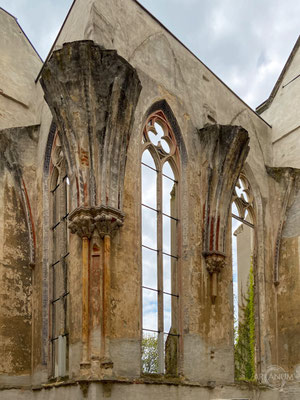
Church Ruin Wachau
Early Origins
A church in the village of Wachau (today a part of Markkleeberg in Saxony) is first documented in 1393. In its early centuries, the church was under the supervision of the nearby monastery Kloster Buch near Grimma until the early 16th century, when its status shifted and it became a filial church of the parish at Cröbern.
A noteworthy relic from that early era is a small bell cast in 1465, which survived through the centuries.

The 19th-Century Rebuild
By the mid-19th century, the old church building was in poor condition. Damage incurred during the historic Battle of Leipzig (October 1813) in the wider region contributed to the parish’s decision to erect a new building.
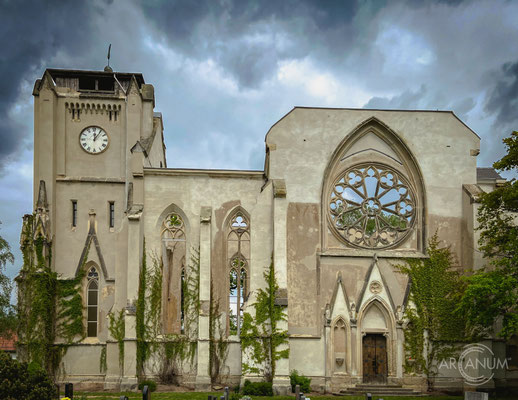
Between 1865 and 1867 a new neo-Gothic church was constructed on the site, designed by the architect Constantin Lipsius (who later played a role in the design of the Peterskirche (St. Peter's Church) in Leipzig). The tower reached a height of about 65 metres, making it a prominent landmark in the Leipzig region.
War Damage and Decline
The church’s fortunes took a downturn with the events of the 20th century. During the Second World War, it sustained serious damage: in 1943 a British aerial mine caused shell-holes in the roof and windows, and in February 1945 American incendiary bombs struck the tower and sacristy.
After the war, under the conditions of the German Democratic Republic (GDR), major repair was not feasible due to limited resources and shifting priorities. The last wedding held inside the church took place in 1956; after that, regular services moved to the parish hall.
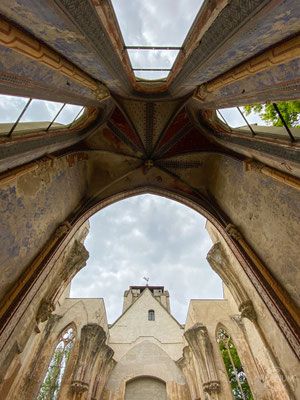
In July 1974 a lightning strike hit the tower. The next year (April 1975) the tower was demolished for safety reasons and its debris was dumped into the nave, causing the vault to collapse.
From Ruin to renewed Use
In the autumn of 1989 a turning point arrived: the building was placed under monument protection (“Denkmalschutz”). Beginning in 1995, structural securing works were initiated. On 11 May 1997 a service marked the “re-dedication” of the site as the "Kirchenruine Wachau".
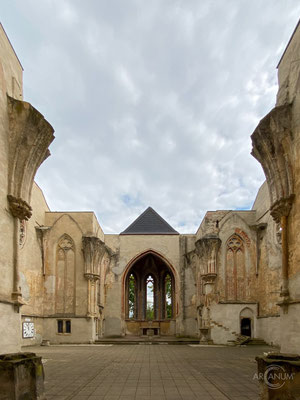
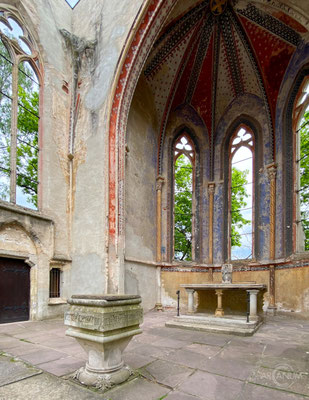
Since then the open-air nave and remaining walls serve as a unique setting for services, concerts, cultural events and exhibitions - preserving the architectural memory while allowing new uses.
Architectural and atmospheric Notes
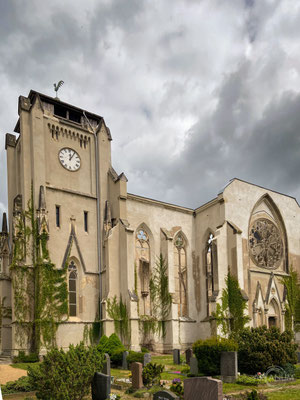
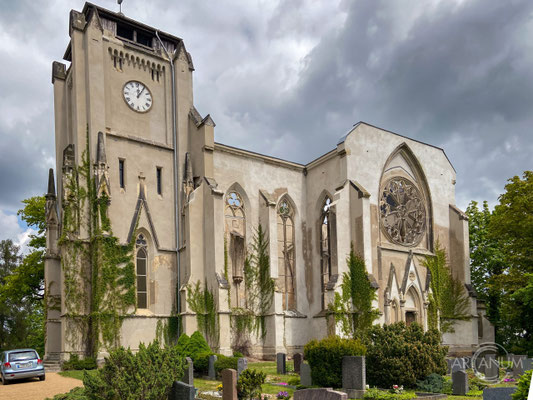
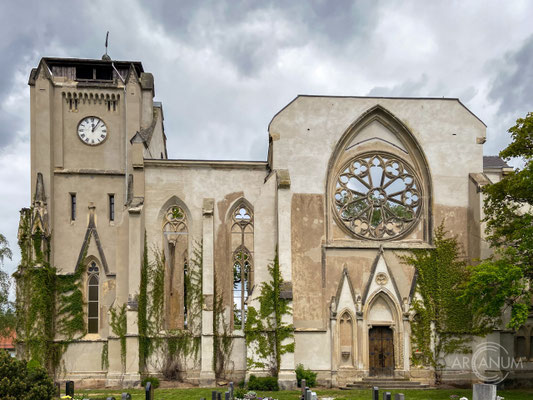
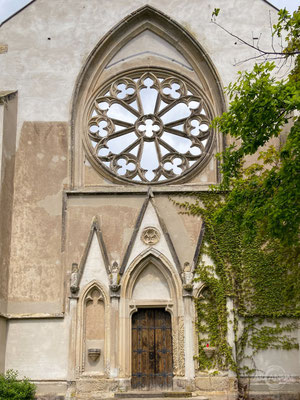
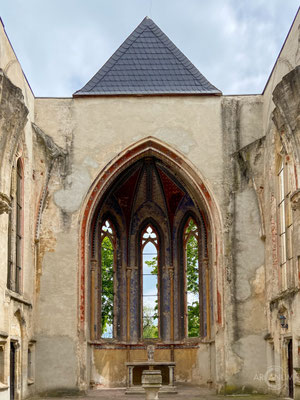
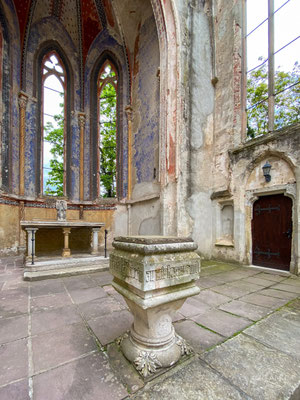
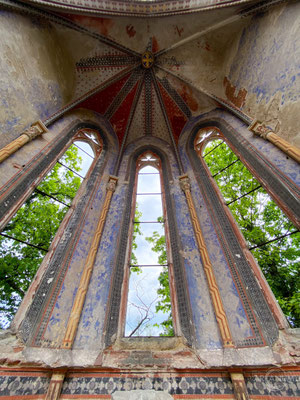
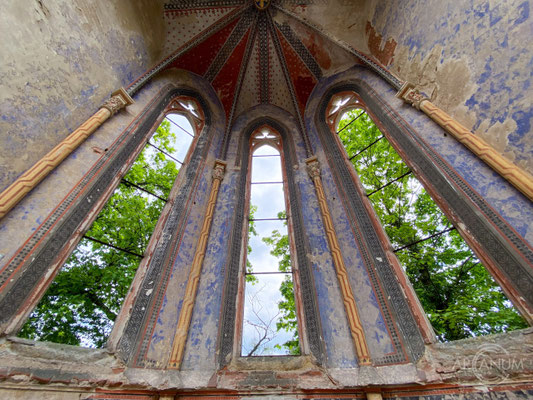
Though the roof is gone and the tower reduced to a stump, many of the exterior stone walls, tall windows (some still with tracery) and the west portal remain, giving a sense of the former grandeur. The juxtaposition of ruin and function (occasional worship, cultural use) lends the place a contemplative rather than sensational character.
Why the Site matters
The Church Ruin Wachau tells more than the story of a building: it reflects a community’s continuity across centuries, through war, industrial change and shifting political regimes. It shows how preservation and adaptive reuse can create meaningful spaces out of architectural loss. Situated on the former village hill of Wachau, now part of Markkleeberg, it anchors local memory in the fabric of changing landscapes - among them the nearby flooded open-pit mines and new lakes of the Leipzig region.
Visited: May 20, 2021
Location: Wachau (Markkleeberg), Germany
Status: Active/Cultural Venue