Psychiatric Hospital E.
Origins and Early Use
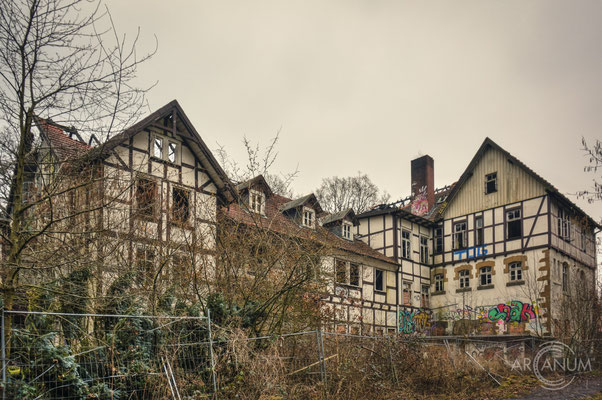
The former psychiatric facility of Eckardtsheim, located in the Senne district of Bielefeld, dates back to the late 19th century. The building was constructed in 1886 on the grounds of an older farm estate, during a period of expansion of the Bethel institutions, a large social welfare network dedicated to the care of marginalized groups.
From the beginning, the site was part of a broader concept rather than a standalone hospital.
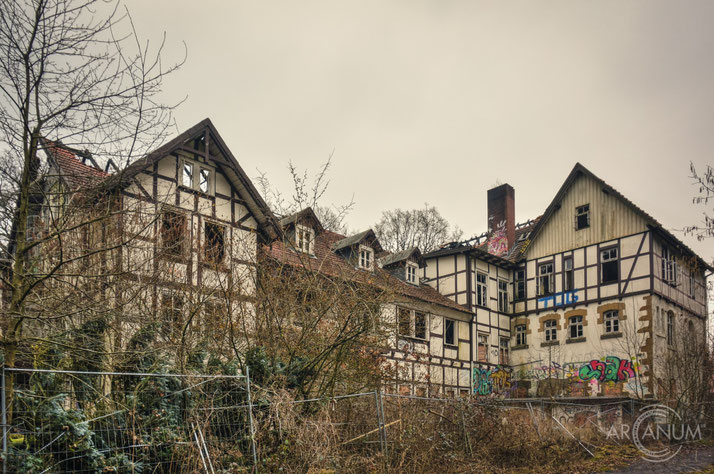
The Bethel foundation aimed to combine housing, work, and medical care, particularly for people suffering from epilepsy, mental illness, and social hardship. The rural setting of Eckardtsheim was intentionally chosen, reflecting contemporary ideas about the therapeutic value of nature and isolation.
Changing Functions Through the Decades
In its early history, the building did not serve exclusively as a psychiatric clinic. Like many institutional structures of its time, it was repurposed several times depending on social needs and historical circumstances.
During both World Wars, the facility was used as a military hospital. In the interwar years, it functioned as a convalescent home for children. These changing roles illustrate how flexible such institutions had to be in response to political and societal upheavals.
Establishment as a Psychiatric Institution
It was only after the Second World War, around 1950, that Eckardtsheim became a dedicated psychiatric facility. At that time, it accommodated around 60 male patients, many of whom were treated for nervous disorders and alcohol dependency.
The institution was part of a system of so-called “pension houses” within the Bethel network. These facilities not only provided care but also generated income through paying patients, helping to support the foundation’s wider charitable activities.
Decline and Structural Change
From the 1970s onwards, psychiatric care in Germany began to change fundamentally. Large, isolated institutions gradually fell out of favor as new models emphasized outpatient care, social reintegration, and smaller, decentralized facilities.
This shift also affected Eckardtsheim. Over time, patient numbers decreased, and the importance of the site diminished. By the late 20th century, the facility had largely lost its original function, leading to its closure in 1998.
Abandonment and Decay
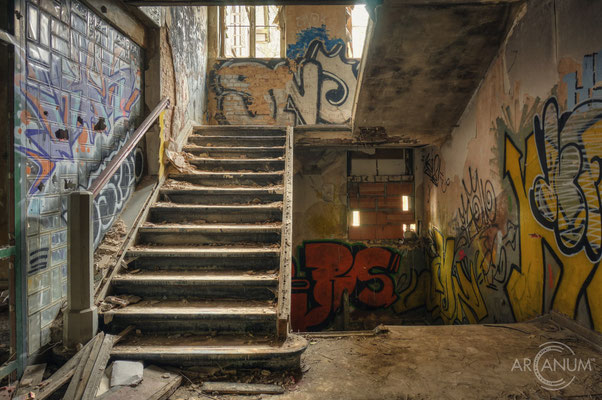
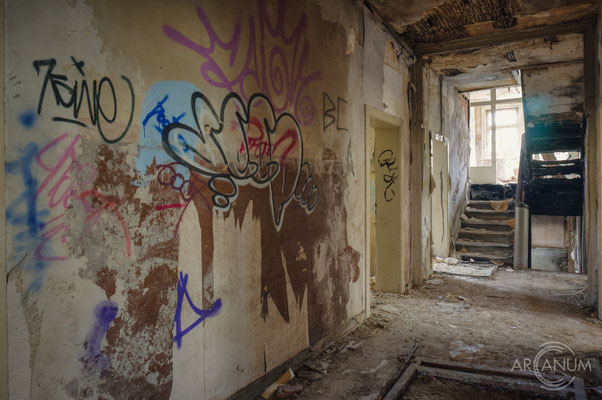
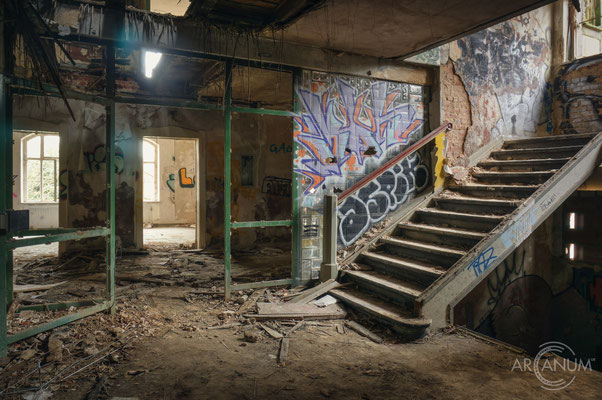
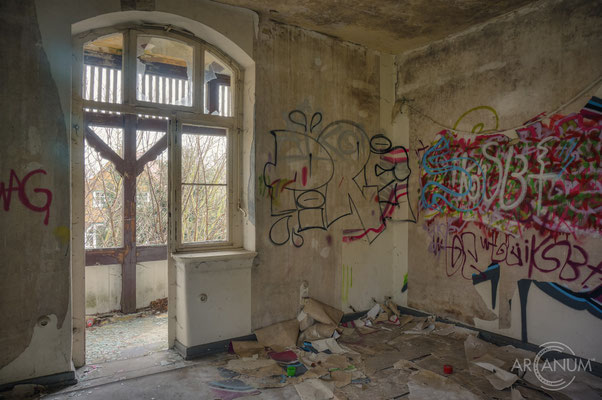
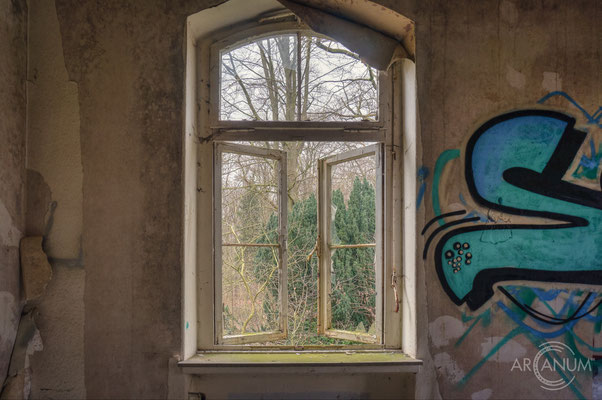
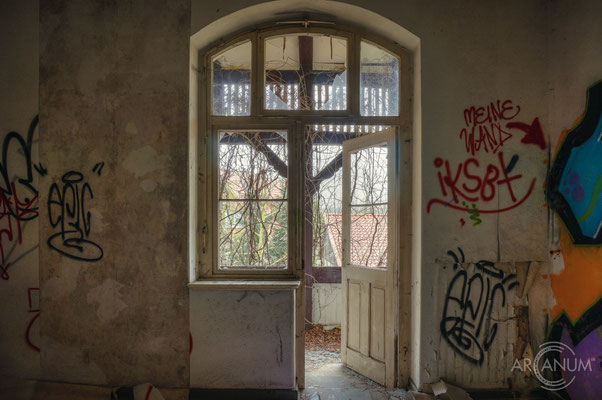
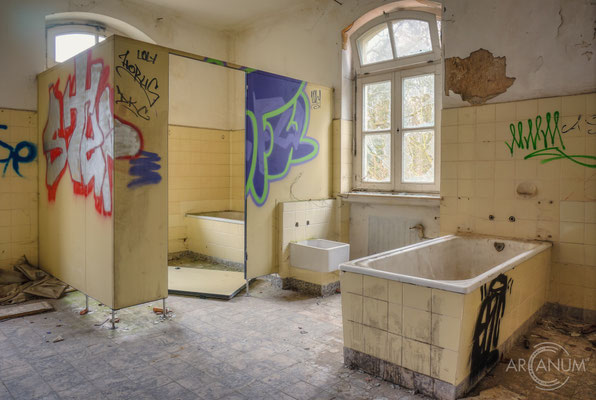
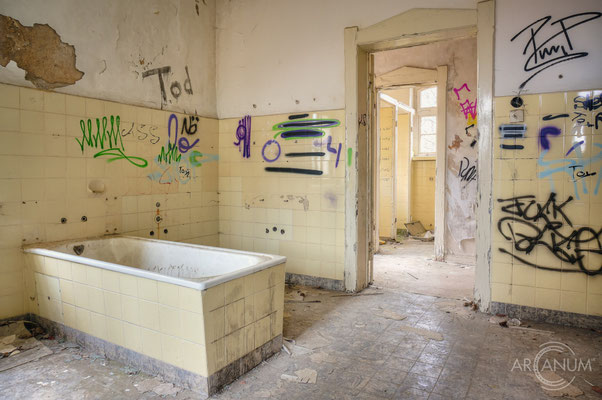
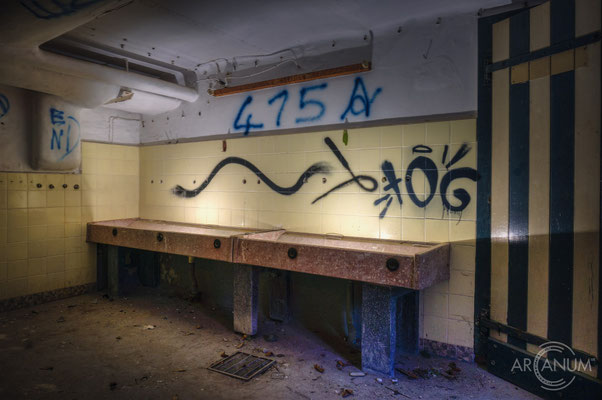
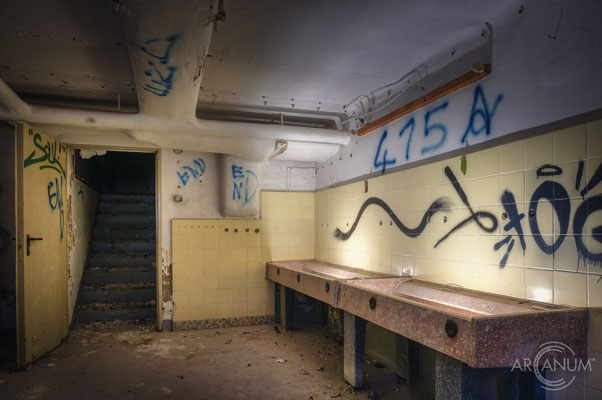
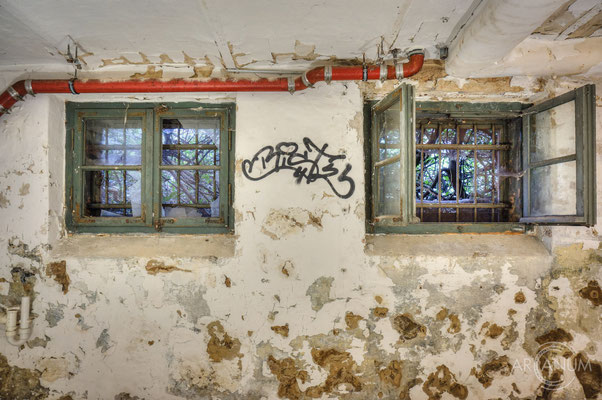
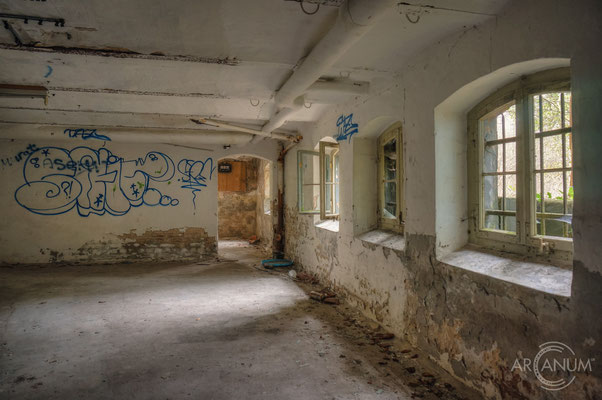
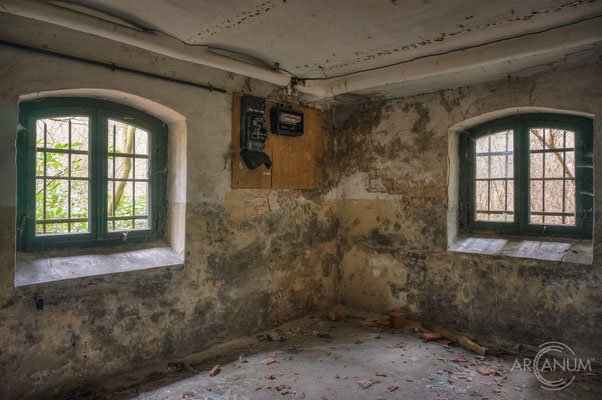
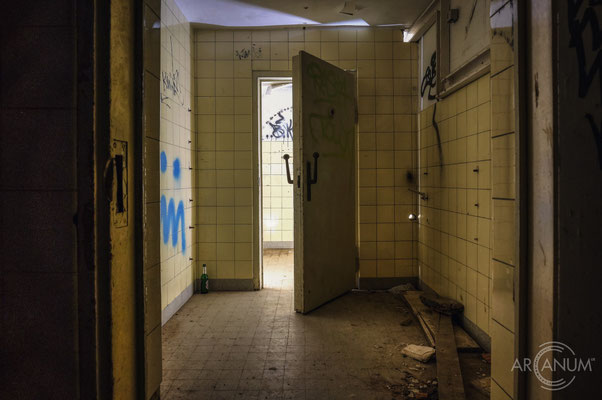
After its closure, the building was sold around the year 2000 and subsequently abandoned. Left without maintenance, it quickly fell into disrepair. Broken windows, water damage, collapsing ceilings, and graffiti transformed the former clinic into a classic “lost place.”
Its secluded location at the edge of a forest contributed to its eerie atmosphere. Like many abandoned psychiatric institutions, it became the subject of local legends and was a popular destination for urban explorers and photographers.
Fire and Current Condition
A major fire in 2013 caused severe additional damage to the already decaying structure, particularly affecting the roof. Reports about the building’s fate after the fire are somewhat inconsistent. While some sources claim that demolition followed, numerous urban exploration accounts and photographic evidence suggest that at least substantial parts of the structure remained standing for years afterward, albeit in a highly unsafe condition.
As of today, the exact state of the site is not always clearly documented, but it is widely regarded as one of the more atmospheric abandoned locations in the Bielefeld region.
Legacy
The former psychiatric facility of Eckardtsheim stands as a reminder of the evolution of mental health care in Germany—from isolated institutionalization to more humane, community-based approaches. At the same time, its ruins reflect the passage of time, the fragility of built structures, and the lingering presence of places once filled with human stories.
Visited: March 24, 2016
Location: Bielefeld, Germany
Status: Abandoned, collapsing