Soviet Garrison M.
The former Soviet garrison of Möhlau, located near the town of Gräfenhainichen in today’s federal state of Saxony-Anhalt, is one of many military sites that illustrate the long-term presence of the Soviet Army in the German Democratic Republic (GDR) during the Cold War. Although less well known than major headquarters or air bases, Möhlau represents a typical medium-sized garrison whose primary function was the accommodation, administration, and daily operation of Soviet military units stationed in East Germany.

Establishment and Construction
The garrison was established in the early 1950s, during the consolidation phase of Soviet occupation forces following the end of the Second World War. At this time, the Soviet Union transformed its former occupation troops into a permanent military presence, later officially known as the Group of Soviet Forces in Germany (GSSD).
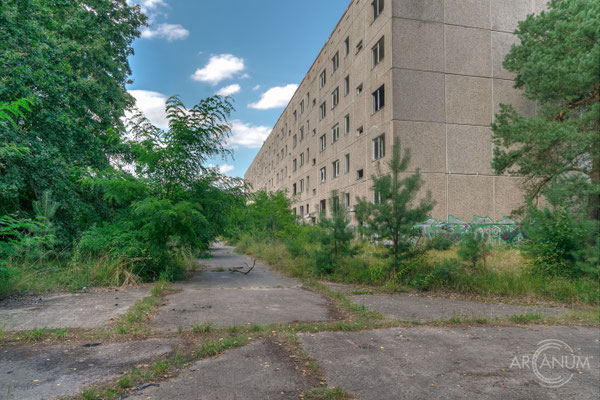
The barracks complex at Möhlau was constructed according to standardized Soviet military building concepts of the post-war period. The architecture was strictly functional, emphasizing durability and efficiency rather than representational design. Most buildings were solid masonry structures, typically two to three storeys high, arranged in a clearly structured compound with internal roads, courtyards, and fenced perimeter areas.
Layout and Barracks Buildings
The garrison consisted primarily of:
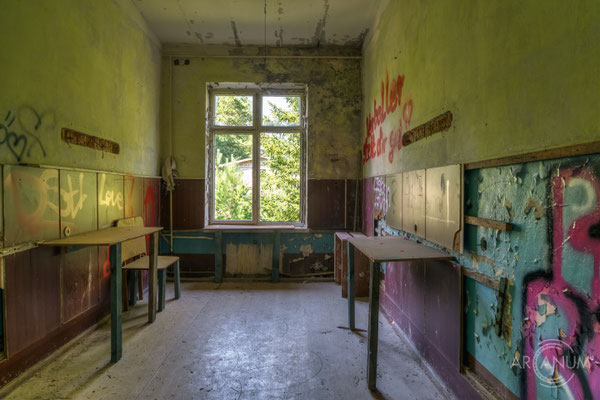
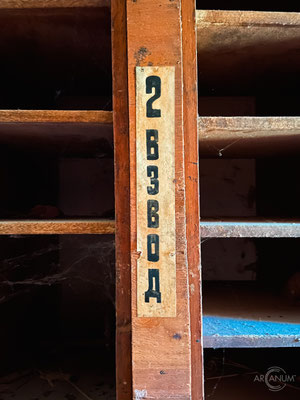
- Troop accommodation buildings, housing enlisted personnel in dormitory-style rooms
- Administrative and staff buildings, used for command, planning, and logistics
- Officers’ quarters, partially separated from the main troop housing
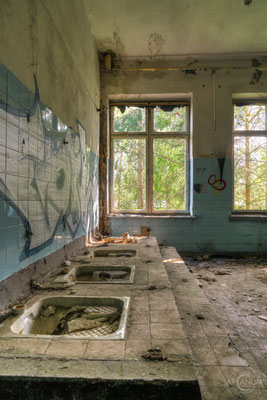
- Service and utility buildings, including kitchens, storage facilities, workshops, and garages
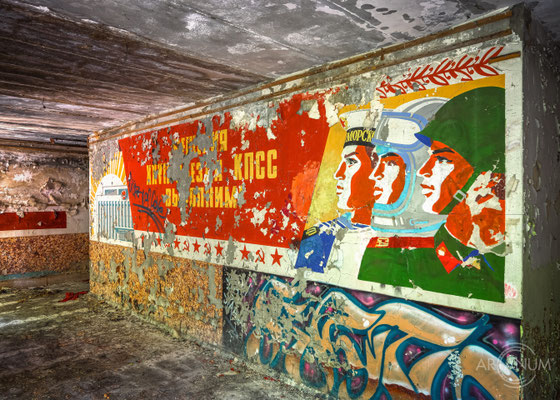
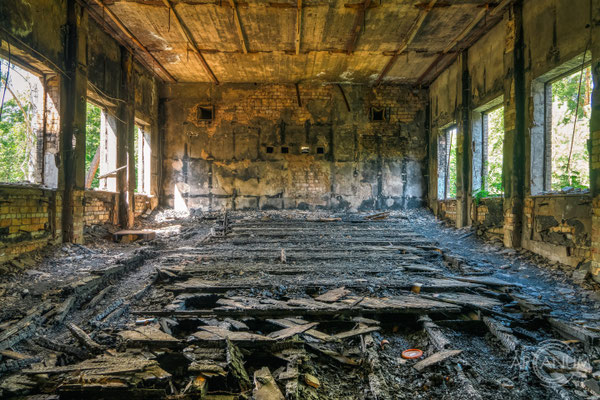
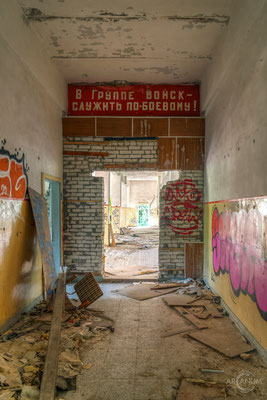
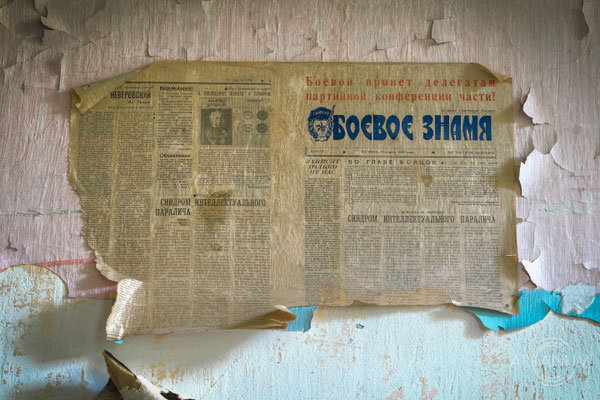
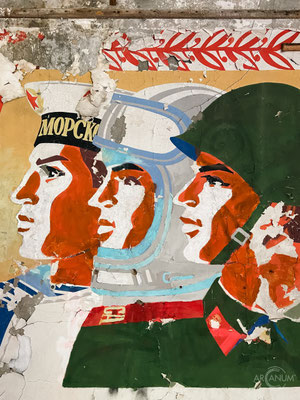
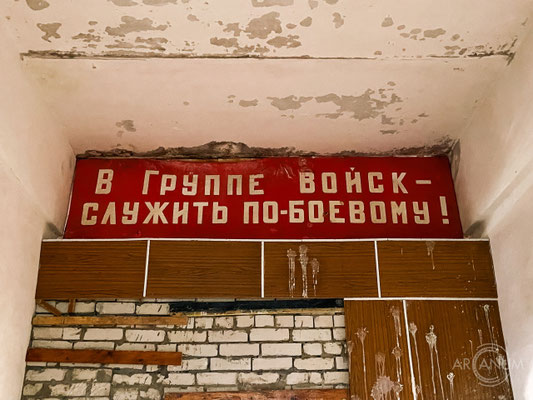
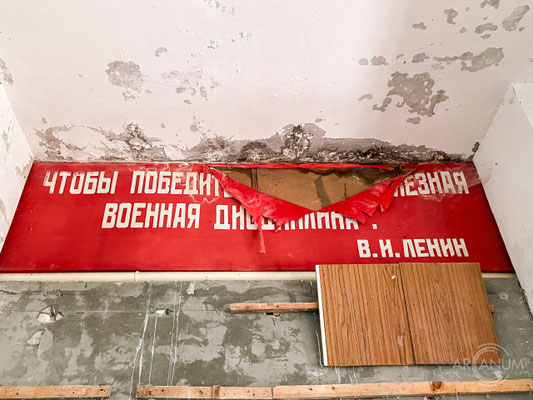
- Cultural and communal facilities, such as assembly halls or club buildings, reflecting the Soviet emphasis on political education and controlled leisure activities within military communities
The overall layout followed the typical model of a self-contained military environment, designed to support everyday life, training, and administration without reliance on surrounding civilian infrastructure.
Military Use During the Cold War
Throughout its active period, the Möhlau garrison served as a permanent stationing and support location for Soviet forces in the GDR. While it was not a major headquarters, it formed part of the dense network of Soviet military sites intended to secure Warsaw Pact readiness in Central Europe.
Like many similar garrisons, Möhlau was closely integrated into nearby training areas and technical facilities. The daily routine combined military training, maintenance duties, political instruction, and garrison life, largely isolated from the local civilian population.
Associated Underground Facilities
In the wider area of the garrison, underground structures were constructed to support command and communication functions. These facilities formed part of the broader Cold War infrastructure but were separate from the above-ground barracks complex and served specialized military purposes. The present documentation focuses primarily on the visible garrison buildings rather than these underground installations.
Withdrawal and Post-Soviet Use
Following German reunification and the political changes in Eastern Europe, the withdrawal of Soviet troops from Germany began in the early 1990s. The Möhlau garrison was vacated between 1991 and 1994, in line with the complete withdrawal of Russian forces from former GDR territory.
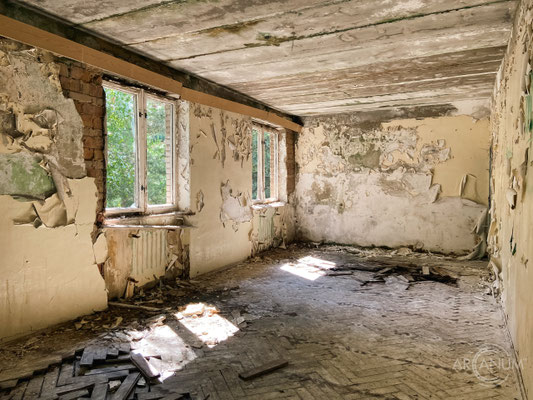
After the departure of the military, the site entered a period of uncertain civilian use. Parts of the former barracks were temporarily repurposed, including use as accommodation for refugees and asylum seekers, before these functions were eventually discontinued. Long-term redevelopment plans were either not realized or only partially implemented.
Present Condition
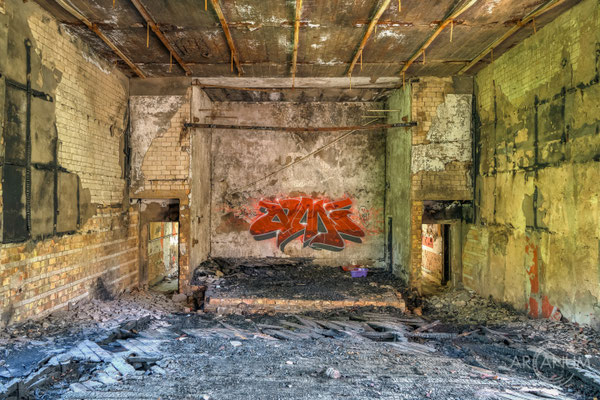
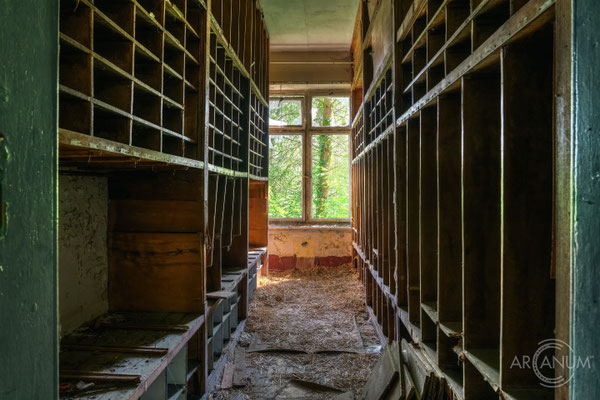
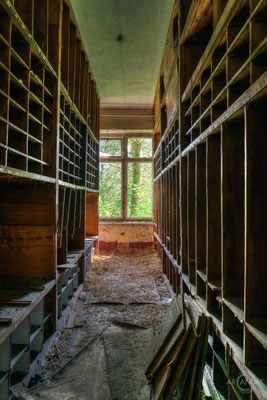
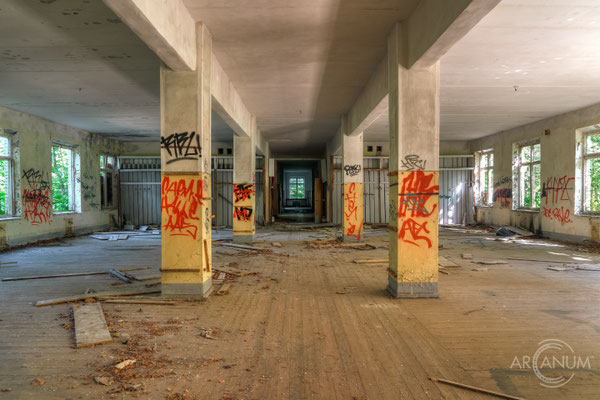
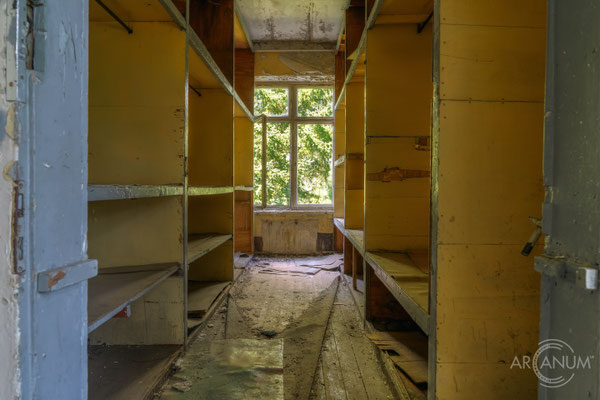
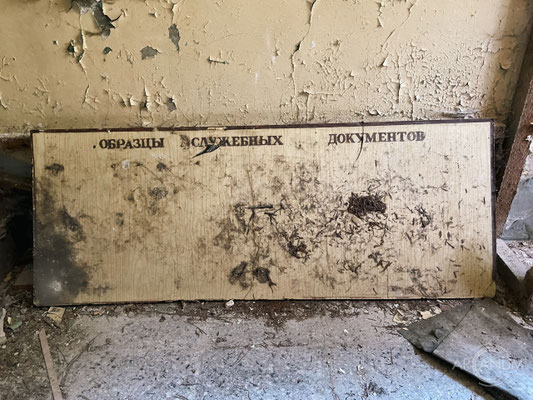
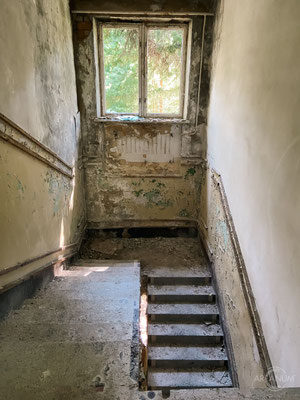
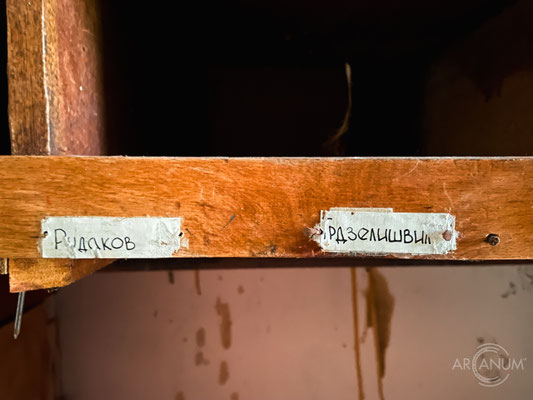
Today, the former garrison stands largely abandoned. Many buildings show clear signs of decay, vandalism, and weather damage, while others remain structurally intact but empty. The site has become a point of interest for historians, local researchers, and urban explorers alike.
Historical Significance
The GSSD garrison at Möhlau is a representative example of Soviet military infrastructure in East Germany. It reflects:
- the scale and permanence of Soviet military presence during the Cold War
- the standardized architecture and organization of Soviet barracks complexes
- the abrupt transformation of such sites after 1990, from highly restricted military zones to abandoned spaces
As a lost place, Möhlau is not only a photographic subject but also a material witness to Cold War history, offering insight into everyday military life behind the Iron Curtain and the lasting physical traces of geopolitical confrontation in Central Europe.
Visited: August 14, 2021
Location: Möhlau, Germany
Status: Abandoned