Soviet Garrison F.
After the end of the Second World War in 1945, Fürstenberg/Havel became an important base of the Group of Soviet Forces in Germany (GSFG), the Soviet Army contingent stationed in the German Democratic Republic. Soviet troops entered the town in May 1945 and subsequently transformed it into one of the key garrison towns in northern Brandenburg. Large parts of the town and its surroundings were declared restricted military zones and remained inaccessible to the local population for decades.

At the heart of the Soviet presence in Fürstenberg was the 2nd Guards Tank Army, one of the most prestigious formations of the Red Army. This army, which had been the first to enter Berlin in 1945 and later carried the honorary title “Red Banner,” maintained its command center in Fürstenberg for many years. With several divisions and supporting units under its command, the 2nd Guards Tank Army strongly shaped the character of the town. At its peak, an estimated 25,000 to 30,000 Soviet soldiers were stationed in and around Fürstenberg (including various units at other stations) - significantly more than the number of civilian inhabitants.
A prominent reminder of this period is the villa district near the lake, which before the war had served as an exclusive residential and holiday area. After 1945, many villas were expropriated and converted for Soviet use. This area housed the army headquarters as well as residential buildings for senior officers and administrative staff. One of the central buildings was the so-called House of Officers, which functioned as a social and cultural center for the Soviet military community.
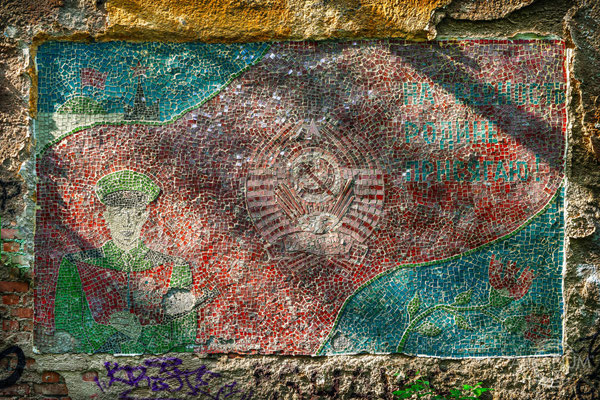
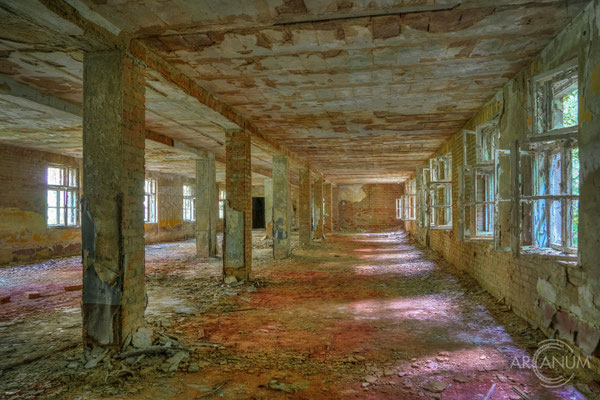
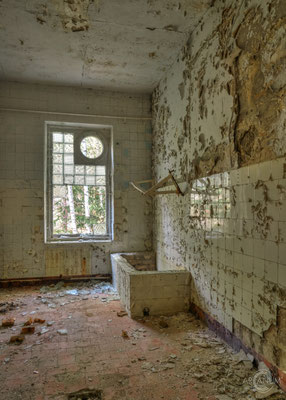
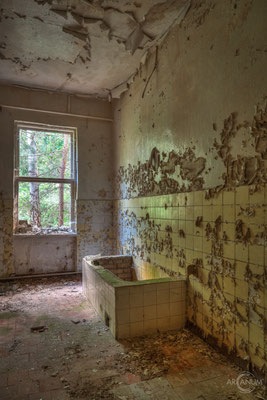
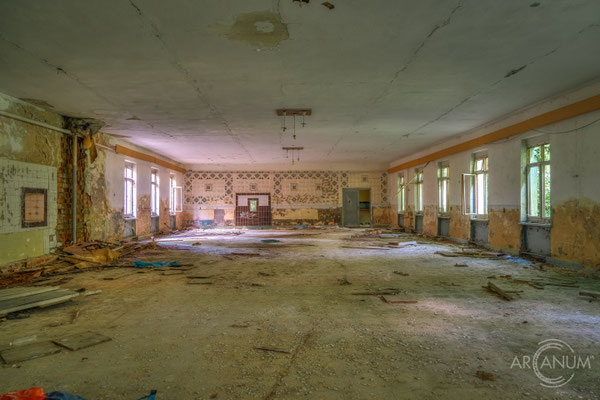
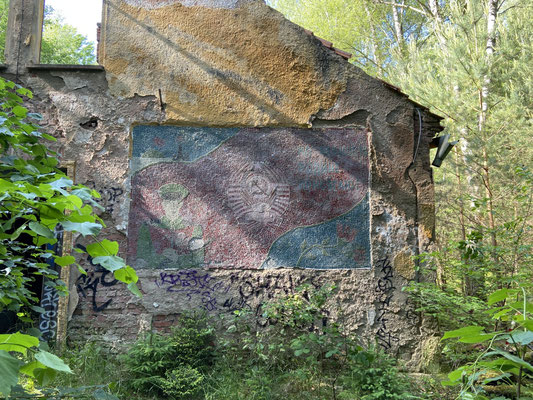
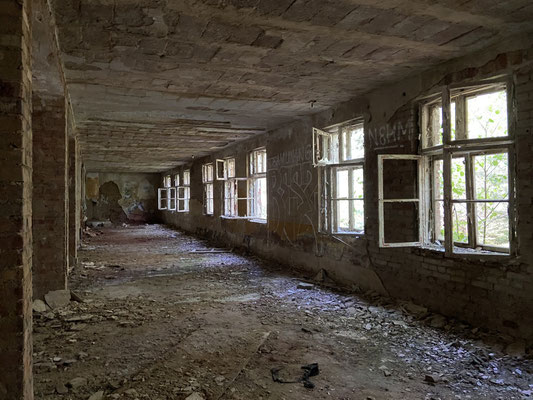
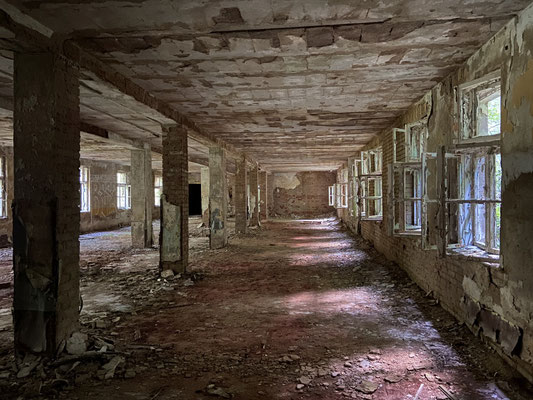
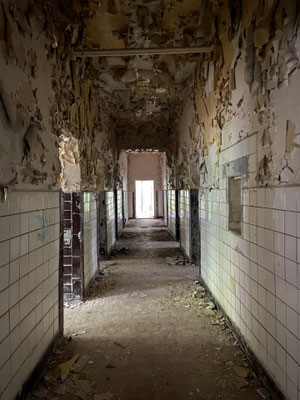
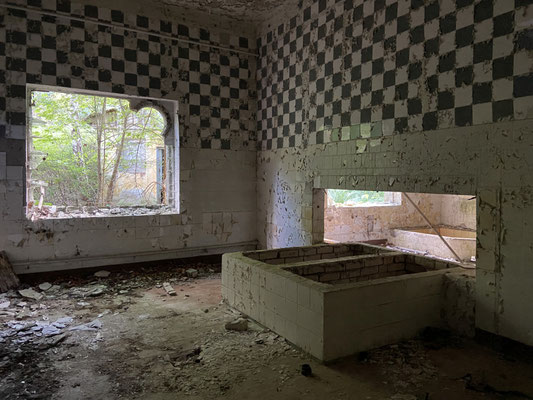
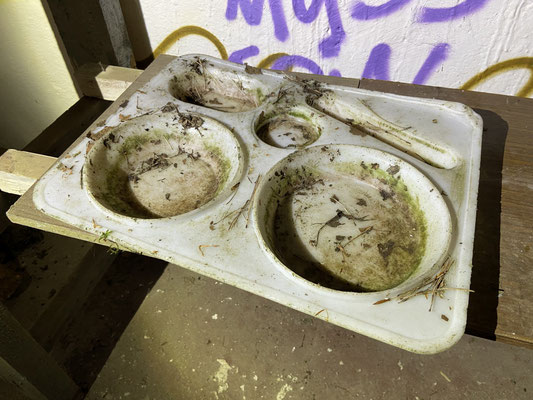
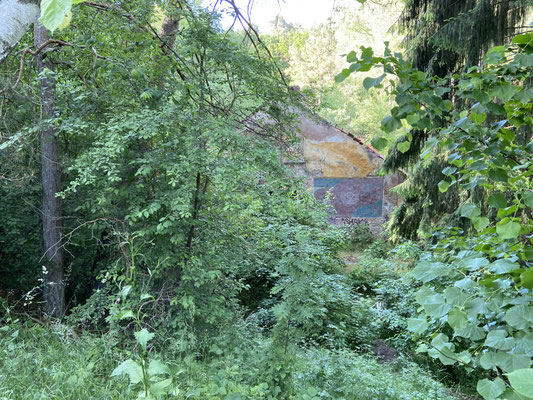
Beyond the villa district, numerous barracks, workshops, depots, and logistical facilities were established throughout the town and the surrounding forests. Many of these structures have been demolished, but a few still exist today - often abandoned or partially overgrown - serving as tangible remnants of everyday military life during the Cold War.
A particularly secret component of the Soviet military infrastructure was the special weapons storage site “Lychen II”, also known under various code names such as Himmelpfort Special Weapons Depot. Located in the forested area of the Himmelpfort Heath west of Fürstenberg, this facility was in operation from 1967/68 until 1990. It served as a nuclear weapons storage site, housing atomic warheads in heavily reinforced underground bunkers. After the withdrawal of Soviet forces, most surface structures were dismantled; the sealed bunkers remain, secured and inaccessible to the public.
Another striking relic of the Soviet era is a solitary Lenin head, originally part of a monument on one of the military sites. Today, it stands in a private garden in Fürstenberg. Such monuments were typical elements of Soviet military bases and reflected the ideological symbolism that accompanied the armed forces.
Following the political changes of 1989–1990 and the end of the GDR, the withdrawal of Soviet troops from Germany began. The 2nd Guards Tank Army relocated its headquarters back to the Soviet Union, and by 1993–1994 most military installations in Fürstenberg had been vacated. Since then, many buildings have remained unused, fallen into decay, or been converted for civilian purposes—visible witnesses to nearly half a century in which the Soviet garrison decisively shaped the town and its surroundings.
Visited: June 13, 2021
Location: Fürstenberg/Havel, Germany
Status: Abandoned